Discover UK Dentistry courses, leading dental schools, entry requirements, UCAT preparation, tuition fees, scholarships and career opportunities.
Quick Facts:
Meet Academic & Testing Prerequisites: Secure top grades in A Levels or Intermediate (focusing on Biology and Chemistry) and prepare early for the compulsory University Clinical Aptitude Test (UCAT).
Track Application Cut-Offs: Apply through UCAS by October 15 for undergraduate BDS programmes to ensure equal consideration across UK dental schools.
Demonstrate Professional Readiness: Build a well-rounded portfolio highlighting clinical shadowing experience, strong communication skills, and personal statement references.
Plan Strategic Financing: Explore university merit awards and partial scholarships early to assist with tuition and living expenses.
Dentistry is becoming one of the most lucrative careers, and the UK is a preferred study destination for many Pakistani students. Choosing this degree is one of the biggest decisions you’ll make, especially when you’re planning to study abroad. Dentistry stands out because it offers a respected professional qualification that provides strong career prospects and long-term earning potential. It offers more than a degree, including international recognition and a strong return on your investment.
The UK has been a popular destination for healthcare education for decades now. Its dental schools are known for combining academic learning with extensive clinical training, which will help you develop the knowledge and practical skills needed to succeed in modern healthcare settings.
You will gain high-quality clinical training, qualifications that are recognised internationally, and a pathway to a satisfying career in the healthcare sector. Whether you want to work in the UK, return to Pakistan, or explore opportunities in other countries, a UK dental degree can open doors across the global healthcare sector.
In this guide, we’ll cover everything you need to know about studying Dentistry in the UK, making it easier to understand the process if you’re planning to become a dentist in the future.
Why Should Pakistani Students Choose Dentistry in the UK?
When you’re investing several years and a significant amount of money into your education, choosing the right country and course matters a lot. Dentistry is a course that can lead to a variety of career paths, giving you several choices after graduation.
Dentists in the UK have the choice of opening private practices or working for the National Health Service (NHS). Dentists who work for the NHS can offer necessary dental care to a variety of patients, including those from underprivileged regions.
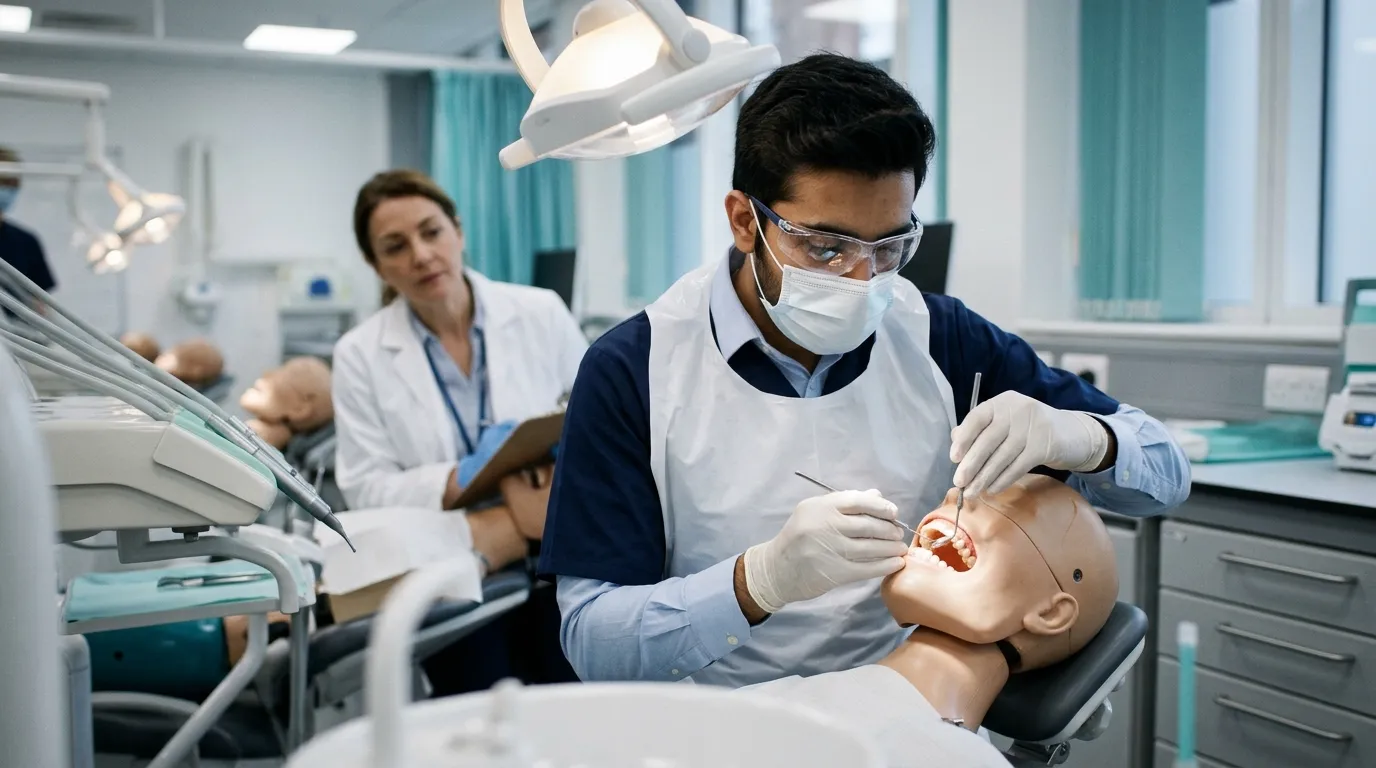
Another important reason is the quality of clinical training. Dentistry isn’t a profession that can be learned from textbooks alone. You will need extensive experience working with patients, understanding treatment planning, and developing practical clinical skills. UK dental schools place a strong focus on patient care and hands-on learning from an early stage of the programme.
The profession also offers a clear career pathway. Unlike many degrees where graduates spend years trying to find their direction, Dentistry leads directly into a recognised healthcare profession. After completing the necessary training and registration requirements, you can begin building a career in dental care and oral health.
Worried about the ROI? Studying Dentistry in UK is an excellent choice for you and your family because, in the long run, it will cover all your expenses. Qualified dentists are in high demand across many healthcare systems, and once you become an experienced professional, you'll enjoy a high income throughout your career.
Beyond financial rewards, Dentistry makes a positive difference to people’s lives. Whether you’re helping a patient overcome pain or helping them maintain good oral hygiene, studying Dentistry in UK allows you to make a meaningful and fulfilling difference every day.
What Does a Dentist Do and Why Is Dentistry a Popular Career?
Dentistry, like any other profession in the medical sector, is essential to overall health, with research showing that oral health is closely linked to conditions such as heart disease and diabetes. That’s why there is always demand for dentists by employers worldwide.
Many think dentists spend most of their time filling cavities or extracting teeth, but the profession is much broader than that.
A dentist is responsible for diagnosing oral health conditions, creating treatment plans, performing dental procedures, and helping patients maintain good oral hygiene. Dentists play an important role in preventing problems before they become serious and helping patients manage existing conditions.
Typical responsibilities include:
Diagnosing oral health conditions
Treating dental diseases
Performing restorative dentistry procedures
Educating patients about oral hygiene
Managing patient care and treatment plans
Dentists often work alongside other professionals such as orthodontists, oral surgeons, and dental hygienists to provide comprehensive care.
One reason Dentistry remains a popular career is that it has consistently been ranked among the highest-earning healthcare professions.
Which Dentistry Courses Can Pakistani Students Study in the UK?
The most common route into the profession is a Bachelor of Dental Surgery, commonly known as a BDS.
If you’re applying after completing Intermediate, A Levels, or an equivalent qualification in Pakistan, the BDS programme will usually be your starting point. This degree combines scientific knowledge with extensive clinical education and professional training.
A BDS programme typically takes five years to complete and prepares students to enter the dental profession.
Students who already hold a dental qualification and want to specialise further can choose postgraduate programmes such as:
MSc Restorative Dentistry
MSc Orthodontics
MSc Dental Public Health
MSc Clinical Dentistry
These programmes allow graduates to develop expertise in specific areas of dental sciences and advance their careers.
Choosing the right course is important, but selecting the right university matters just as much.
Which Are the Best Dental Schools in the UK?
Some of the best universities for studying Dentistry in UK are recognised not only across the country but also internationally. While rankings can be a useful starting point when comparing dental schools, they shouldn’t be the only factor influencing your decision.
You’ll also want to consider the quality of clinical facilities, access to practical learning, teaching standards, and the support available throughout your studies.
A strong dental school should provide:
Modern clinical facilities
Access to teaching hospitals
Experienced academic staff
Strong graduate employment outcomes
Professional accreditation
AHZ works with several well-regarded UK universities that offer Dentistry programmes for international students. Below are some of the best universities for Dentistry, according to the Complete University Guide’s Dentistry Subject League Table 2027—
University of Dundee
Queen's University Belfast
University of Plymouth
Teesside University
University of Lancashire
Each university has its own strengths, whether that’s clinical training opportunities, research excellence, student support, or graduate outcomes. The best option for you will depend on factors such as your academic background, budget, preferred study location, and long-term career plans.
What Are the Entry Requirements for Dentistry in the UK?
Dentistry is one of the most competitive healthcare programmes in the UK. You'll need to have good academic performance and evidence that you understand the profession. This can strengthen your application.
You'll need to meet the following requirements:
High grades in Biology and Chemistry
Strong overall academic performance
English language proficiency
A personal statement
Academic references
UCAT results for many dental schools
You can meet the English language requirements through IELTS or PTE Academic, but the exact score you’ll need to be granted admission depends on the university you apply to, so it’s important to check the requirements carefully before submitting your application.
You'll also need to remember that good grades alone aren’t always enough to secure a place. Universities may also assess your communication skills, motivation for studying Dentistry, and your understanding of patient care.
What Is the UCAT, and Do Pakistani Students Need It for Dentistry?
The University Clinical Aptitude Test, known as the UCAT, is used by many UK dental schools as part of their admissions process because it helps universities assess whether applicants have the skills needed to succeed in healthcare
Unlike school exams, the UCAT doesn’t test your knowledge of Biology or Chemistry. Instead, it measures the skills you need in the healthcare profession.
The UCAT assesses several areas, including:
Verbal reasoning
Decision making
Quantitative reasoning
Situational judgement
Preparing early is important because strong UCAT performance can strengthen your application significantly.
How Much Does It Cost to Study Dentistry in UK?
Before applying, you'll need to understand the full financial commitment involved.
Dentistry is one of the more expensive healthcare degrees because of the specialist facilities, equipment, and clinical training required throughout the programme.
Annual tuition fees for international students are:
BDS programmes: £30,000 to £55,000+ per year
Postgraduate Dentistry programmes: £20,000 to £45,000+ per year
In addition to tuition fees, students should budget for accommodation, food, transport, study materials, and personal expenses.
Although the costs can seem high, many families view a dental degree as a long-term investment because of the profession’s strong career prospects and earning potential.
What Scholarships Are Available for Pakistani Dentistry Students?
Scholarships can help reduce the overall cost of studying abroad and make UK education more accessible.
While full scholarships for Dentistry are less common than for some other subjects, many universities offer partial funding opportunities.
Popular options include:
University Excellence Scholarships
International Student Scholarships
Faculty-Based Awards
Commonwealth Scholarships for eligible postgraduate programmes
Other merit-based funding opportunities
Scholarship availability varies between institutions, so it’s worth checking individual university requirements carefully.
How Much Clinical Training Do Dentistry Students Receive?
One of the biggest strengths of studying Dentistry in the UK is the amount of hands-on clinical training you'll receive before graduation.
Throughout the programme, you'll gain experience in teaching clinics, dental hospitals, and supervised clinical environments.
Clinical experience often includes:
Treating patients under supervision
Conducting dental examinations
Performing restorative procedures
Delivering preventive dentistry services
Managing clinical cases
To build confidence, you need practical training and professional skill development.
What Career Opportunities Are Available After a Dentistry Degree?
A Dentistry degree opens doors to a wide range of career paths within the healthcare sector.
Many graduates begin their careers as general dentists working in dental practices or healthcare organisations.
Others continue their training and specialise in areas such as:
Orthodontics
Oral Surgery
Paediatric Dentistry
Dental Public Health
Academic Dentistry
Some graduates also pursue careers in research, healthcare policy, teaching, and consultancy.
The variety of options available means students can continue developing their careers in directions that match their interests and strengths.
Naturally, many students also want to understand the salary potential associated with these career paths.
What Salary Can Dentists Earn in the UK?
For many families in Pakistan, one of the biggest questions is, “Will this degree help me earn a good income in the future?” That’s why earning potential is an important factor when deciding whether studying abroad is worth the investment.
Newly qualified dentists in the UK may earn between £35,000 and £50,000 or more, depending on their role and location.
As you gain experience, you can build your professional reputation and increase your earning potential. Experienced dentists commonly earn between £60,000 and £100,000 or more.
Those working in specialist fields or private dental practices may achieve earnings exceeding £120,000 annually.
While salaries vary depending on experience, location, and specialisation, Dentistry continues to offer strong long-term earning potential compared with many other professions.
Is Studying Dentistry in the UK Worth It for Pakistani Students?
For many students, the answer is yes.
A UK dental degree provides an internationally recognised qualification, extensive clinical training, and access to a respected healthcare profession. You'll benefit from strong employability, opportunities for specialisation, and the possibility of building careers in different countries around the world.
While Dentistry requires you to be committed in terms of time, effort, and financial investment, the long-term benefits may make the investment worthwhile. The profession offers you a stable, recognised professional career, and opportunities to make a meaningful difference in patients’ lives through high-quality dental care.
If you’re looking for a healthcare career that combines scientific knowledge, patient care, high earning potential, and international career opportunities, then studying Dentistry in the UK is a career path worth considering.
How AHZ Can Help
Applying for Dentistry in the UK can feel complicated, especially when you’re comparing universities, preparing for the UCAT, meeting entry requirements, and exploring scholarship opportunities.
AHZ supports Pakistani students throughout the entire application journey, from selecting the right university and preparing documents to submitting applications and planning for visa requirements.
If you’re considering studying Dentistry in the UK and want guidance on choosing the right dental school for your academic profile and career goals, speak with the AHZ team and take the next step towards your future in healthcare.
Frequently Asked Questions
- Can Dentistry graduates work outside the UK after graduation?
- Many UK dental qualifications are respected internationally, although graduates must meet local licensing requirements in the country where they wish to practise.
- Can Dentistry students specialise after graduation?
- Yes. Graduates can pursue specialist training in areas such as Orthodontics, Oral Surgery, Paediatric Dentistry, and Dental Public Health.
- Can Pakistani students apply to UK dental schools directly after intermediate education?
- Yes. Students who meet the academic and English language requirements can apply directly to undergraduate Dentistry programmes.
- How long does a Dentistry degree take in the UK?
- Most BDS programmes take five years to complete.
- Is Dentistry more competitive than Pharmacy in the UK?
- Yes. Dentistry generally has stricter entry requirements and fewer available places, making admission more competitive than many Pharmacy programmes.
- Is private dentistry more profitable than NHS dentistry?
- Private dentistry often offers higher earning potential, although income depends on experience, reputation, and location.
- Is work experience important for Dentistry applications?
- Yes. Relevant work experience or shadowing opportunities help demonstrate your understanding of the profession.
- What is the biggest mistake Pakistani students make when applying for Dentistry?
- Many students focus only on grades and underestimate the importance of UCAT preparation, work experience, and a strong overall application.
- What qualities do UK dental schools look for in applicants?
- Universities look for academic ability, communication skills, professionalism, empathy, teamwork, and commitment to patient care.
- Which science subject is most important for Dentistry admission?
- Both Biology and Chemistry are extremely important, although many universities place particular emphasis on Chemistry.