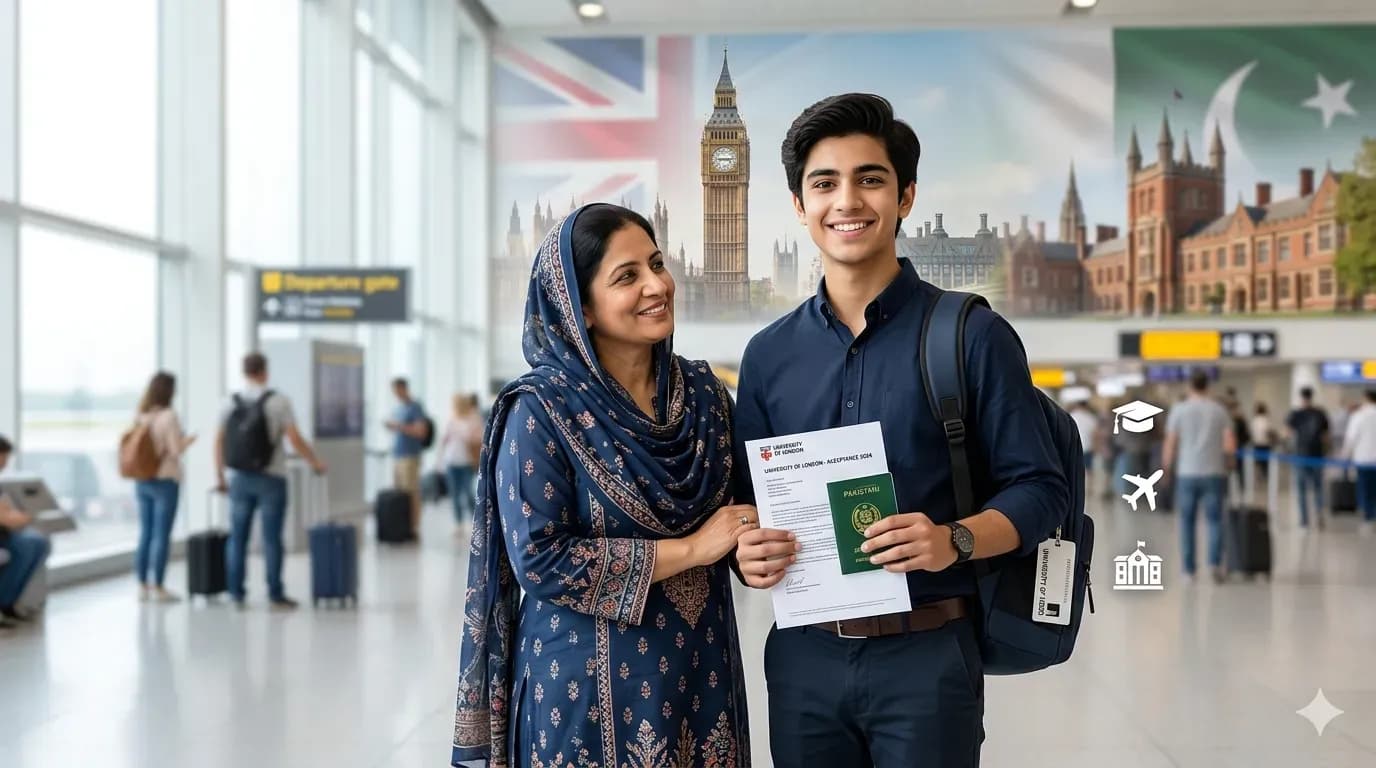
Your complete guide to studying MBBS in the UK for Pakistani students
Becoming a doctor is a dream for many, and the United Kingdom offers some of the best medical training in the world. At AHZ, our team has supported students for over a decade, and we know that the path to a medical degree is both challenging and rewarding.
For Pakistani students, gaining admission to a medical school in the UK is a top-tier goal that requires careful preparation. This guide helps you understand exactly how to approach this journey for the 2027 intake.
Can Pakistani Students Study MBBS in the UK?
Yes, Pakistani students can absolutely study medicine in the UK. The medical degree programmes there are highly respected and open to international students who can meet the tough entry requirements. Because medicine is such a popular field, the admission eligibility is competitive, meaning you need top-tier grades and a strong application to stand out.
What Is MBBS Called in the UK?
When looking at UK university websites, you might notice that the degree is not always labelled as "MBBS." Instead, you will often see it called an MBChB or MB BChir. While the names vary by institution, they all refer to the same Bachelor of Medicine, Bachelor of Surgery qualification. All these titles are equivalent and qualify you to practice as a junior doctor once you finish your training.
Top Medical Universities in the UK
While medical schools are spread across the country, some of our partners are well-known for their strong academic focus and quality clinical training. If you are aiming for medicine, consider looking into:
- Keele University: Known for a modern medical curriculum that focuses on early clinical contact.
- Queen's University Belfast: Offers a high-ranking medical programme with strong links to local hospitals.
- University of Aberdeen: Offers a long-standing tradition of medical excellence with extensive research opportunities.
- University of Buckingham: One of the few universities in the UK that offers a four-year graduate-entry medical programme, which is great if you have already completed a relevant Bachelor's degree.
- University of Dundee: Highly regarded for its innovative teaching methods and commitment to clinical practice.
Eligibility Criteria for Pakistani Students
Getting into a medical programme is about proving you have the academic strength to handle the workload.
- Academic Scores: Most schools look for A-levels (typically A*AA) or the equivalent. If you are applying with an FSc or HSSC from Pakistan, you will almost certainly need to complete a Foundation programme first to bridge the gap.
- Entrance Tests: You will need to sit for the UCAT or sometimes the BMAT, depending on the school.
- English Proficiency: A high IELTS score (usually 7.0 or 7.5 overall) is mandatory to ensure you can communicate clearly in a clinical setting.
UCAT / BMAT Entrance Exams Explained
These are the most critical steps in your application. The UCAT (University Clinical Aptitude Test) and BMAT (BioMedical Admissions Test) are not tests of what you have memorised in biology or chemistry. Instead, they test your logical reasoning, decision-making, and situational judgement. Most UK medical schools use these tests to filter candidates before they even consider your personal statement or interview.
Admission Process (Step-by-Step)
The path to admission is structured and follows a specific timeline:
- Choose Your Universities: You can usually apply to four medical schools via UCAS.
- Take Your Entrance Exam: Register for and sit your UCAT or BMAT well before the application deadline.
- Submit Your UCAS Application: Ensure your personal statement clearly explains your passion for medicine and your relevant experience.
- Attend Interviews: If you are shortlisted, you will be invited to an interview. This is your chance to show your communication skills and professional attitude.
- Receive Your Offer: If successful, you will receive a conditional or unconditional offer.
Our team of experts at AHZ are available to help guide you through the entire application process in order to avoid common mistakes.
Tuition Fees for MBBS in the UK
Medical education is a significant investment. For international students, tuition fees in the UK typically range from £25,000 to £45,000 per year. Remember that medical degrees are usually five or six years long, so you need to plan your finances for the entire duration of the programme.
Cost of Living in the UK for Students
Beyond your fees, you must budget for your daily life. Your monthly expenses will include accommodation, food, heating, electricity, and local transport. Living in London is more expensive than living in cities like Aberdeen or Dundee. You should prepare a budget that allows for these costs to ensure you can focus on your studies without stress.
Scholarships for MBBS in the UK
While tuition support for medicine is not always easy to find, you should keep an eye on university scholarships and bursaries. These are usually partial awards based on your academic record. Check the websites of the universities you are applying to for any specific funding for international students. Remember, there are no shortcuts; these are highly competitive awards.
Career Opportunities After MBBS in the UK
Once you graduate, you enter Foundation training, and this is a two-year paid programme that serves as your NHS internship. After this, you can move into speciality training. A career in medicine is stable, well-paid, and offers clear paths for progression, whether you stay in the UK or return home to Pakistan.
Can Pakistani Doctors Work in the UK?
Yes, they can. To practice, you must be registered with the GMC (General Medical Council). If you have completed your MBBS in Pakistan, you will likely need to pass the PLAB exams to prove your medical knowledge meets the UK standard. After passing these, you can apply for medical registration and start working in the NHS.
How AHZ Can Help
At AHZ, we are dedicated to helping you reach your medical career goals in the United Kingdom. We offer a complete range of free services to ensure your journey to medical school is smooth and successful:
- Personalised Counselling: You will receive one-to-one guidance tailored to your specific academic background and your dream of becoming a doctor.
- University & Course Selection: We help you identify the best UK medical schools and programmes that fit your personal goals.
- Application Support: Our skilled team manages the entire medical school application process for you.
- Personal Statement Review: Get professional feedback to help you craft a compelling and strong personal statement that highlights your passion for medicine.
- Document Checking: We review all your paperwork to ensure it perfectly matches the strict standards of UK medical schools.
- Guidance for University Interview: Build your confidence with training from our experts to help you excel in your medical admissions interviews.
- Scholarships & Financial Advice: Our advisors offer insight into managing your budget and help you identify available scholarship opportunities for medical students.
- UK Student Visa Guidance: We provide clear, step-by-step assistance to help you through the visa application process.
- Pre-departure Briefings: We host special events to give you practical advice so you feel ready for your new life in the UK.
- Post-Arrival Support: Our team stays in touch to answer your questions and help you settle into your new environment with ease.
Do you need complete assistance from your first application to your final enrolment in a UK medical programme? Connect with one of our professional counsellors at AHZ. Reach out to us today!
Frequently Asked Questions
- Are scholarships available for MBBS?
Yes, some universities offer partial merit-based scholarships, though they are highly competitive.
- Can Pakistani students study medicine in the UK?
Yes, as long as they meet the academic and English language requirements.
- How much does an MBBS cost in the UK?
Tuition fees for international students generally range from £25,000 to £45,000 per year, depending on the university.
- Is a UK MBBS valid in Pakistan?
Yes, a degree from a recognised UK medical school is highly respected and valid for practice in Pakistan, provided you meet the requirements set by the PMDC.
- Is UCAT compulsory?
Yes, most medical schools require either the UCAT or the BMAT as part of their entry process.